

Hybrid Polymers: Simplifying Admixture Inventories with WR + SR in One

HomeBlogHybrid Polymers: Simplifying Admixture Inventories with WR + SR in One

In the fast-paced world of concrete production, time, efficiency, and precision are critical. Concrete producers are constantly balancing chemical admixtures to meet demanding performance specifications, often juggling multiple products in the process. What if one solution could simplify your inventory while enhancing your concrete’s performance? Enter hybrid polymers—specifically, the revolutionary AltusFlex technology that combines water
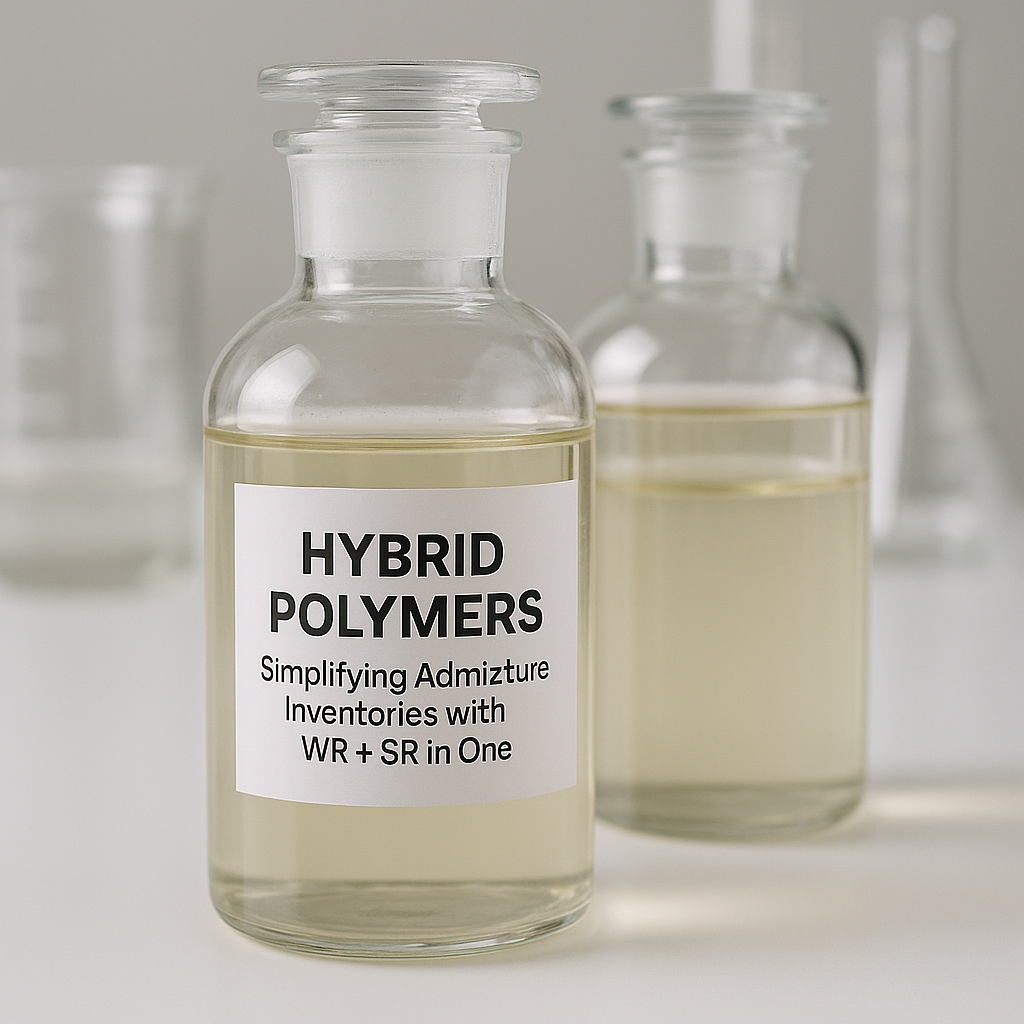
Hybrid Polymers

In the fast-paced world of concrete production, time, efficiency, and precision are critical. Concrete producers are constantly balancing chemical admixtures to meet demanding performance specifications, often juggling multiple products in the process. What if one solution could simplify your inventory while enhancing your concrete’s performance? Enter hybrid polymers—specifically, the revolutionary AltusFlex technology that combines water reduction and slump retention in a single admixture. This innovation is transforming the way admixtures are handled, making mix designs simpler, more efficient, and cost-effective for producers everywhere.

Understanding Hybrid Polymers in Concrete

What Are Hybrid Polymers?

Hybrid polymers are advanced chemical admixtures engineered to provide multiple performance enhancements in a single formulation. In the case of AltusFlex hybrid polymers, the blend is designed to deliver both water-reducing (WR) and slump-retaining (SR) functionalities. By combining these two traditionally separate additives into a single, optimized hybrid, concrete producers avoid the need for multiple admixtures adjusting in real-time, streamlining both inventory and usage.

The Role of WR and SR in Concrete

  • Water Reducers (WR): These admixtures decrease the water content needed to achieve a desired slump, enhancing strength and durability while maintaining workability.
  • Slump Retainers (SR): These additives prolong the workability period of concrete without additional water or re-tempering, which is especially critical for long hauls or delayed placement.

Historically, these two functions have been served by separate admixtures, requiring careful balancing based on ambient conditions, mix design, and project requirements. Now, with AltusFlex hybrid polymers, concrete producers can rely on one admixture to achieve both water reduction and slump retention, simplifying the process significantly.

Introducing AltusFlex: A Two-in-One Solution

AltusFlex is an innovative line of hybrid admixtures designed to address concrete production challenges with a holistic approach. The design philosophy behind AltusFlex hinges on multifunctional polymer technology—essentially building a single molecule that can deliver dual effects on the fresh and hardened properties of concrete.

Key Benefits of AltusFlex Hybrid Admixtures

  • Inventory Reduction: By replacing two admixtures with one hybrid solution, producers can significantly decrease SKUs, lower warehousing costs, and avoid stockouts or overstock situations.
  • Usage Simplicity: There’s no need to worry about complex mixing sequences or dosage conflicts. AltusFlex admixtures streamline batching and reduce the risk of errors.
  • Improved Consistency: A single admixture formulation provides consistent performance across batches, improving quality control and reducing variability on site.
  • Enhanced Workability: AltusFlex maintains slump for extended periods while still achieving robust water reduction—perfect for jobs requiring transport and placement flexibility.
  • Reduced Waste: With less need for re-tempering and water addition on-site, AltusFlex hybrid polymers help limit material waste and enhance sustainability.

How Hybrid Polymers Simplify Admixture Inventories

One of the core operational challenges for ready-mix and precast concrete producers is managing an expansive admixture inventory. With different WR and SR products tailored for varying mix designs and environmental conditions, the admixture bay often becomes a complex array of tanks, dosers, and pipelines.

Simplified Procurement and Logistics

Rather than sourcing and stocking multiple admixtures, producers using AltusFlex benefit from a consolidated supply chain. This leads to:

  • Fewer purchasing transactions and vendor interactions
  • Reduced shipping and handling complexity
  • Simplified quality assurance and testing protocols

Streamlined Dosing and Automation

In automated batching systems, dosing multiple admixtures with precise ratios can be challenging. Incorrect sequencing or dosing can lead to unpredictable behavior in the mix. With AltusFlex, only a single admixture needs to be dosed, reducing the likelihood of errors and downtime associated with system malfunction or operator oversight.

Real-World Impact: AltusFlex in Practice

Let’s look at a typical scenario in a ready-mix operation. A concrete plant previously used a high-range water reducer (HRWR) for strength and a slump retainer to maintain workability for long pulls to job sites. This required:

  • Maintaining safety stock for both products
  • Monitoring compatibility between products in varied ambient temperatures
  • Training staff on dual-dosing protocols

After switching to AltusFlex:

  • The plant reduced its admixture inventory from 12 SKUs to 7.
  • Operators reported a 20% drop in batch adjustments due to dose errors.
  • Quality assurance metrics showed improved uniformity in compressive strength and slump retention across batches.

This transition not only optimized productivity but also reduced operating costs and enhanced product consistency—benefits that quickly translated to increased customer satisfaction.

Performance Across Application Segments

AltusFlex hybrid polymers are versatile across a range of concrete applications and mix types, including:

1. Ready-Mix Concrete

AltusFlex is especially valuable in ready-mix operations where producing quality concrete that must endure delays and travel time is vital. The hybrid admixture sustains slump and flow, giving crews more flexibility without compromising strength.

2. High-Performance Concrete

In infrastructure and architectural applications, where strength and finish are paramount, the precise water reduction facilitated by AltusFlex ensures high compressive gains and reduced permeability without sacrificing workability.

3. Precast and Prestressed Applications

For precast producers, AltusFlex supports early strength development critical to form rotation, and its slump retention properties keep mixes stable during placement and finishing workflows.

Choosing the Right AltusFlex Formulation

The AltusFlex line includes several formulations tailored for varying environmental and performance conditions. Manufacturers work closely with producers to recommend the most appropriate AltusFlex hybrid admixture depending on:

  • Temperature and humidity ranges
  • Aggregate profile and cement type
  • Project-specific strength and workability requirements

Rather than reinventing the wheel for each mix design, producers can rely on a highly compatible, flexible hybrid that can be fine-tuned as needed—without reintroducing the complexity of managing a separate WR and SR product.

Conclusion: Reimagining Admixture Strategy with Hybrid Innovation

Hybrid polymers like AltusFlex are reshaping the concrete landscape. By merging the benefits of water reducers and slump retention into one powerful compound, AltusFlex offers a smarter, more efficient way forward for concrete producers seeking to simplify operations while improving performance.

In an industry where every minute counts and every mix matters, adopting a hybrid approach doesn’t just simplify inventory—it amplifies efficiency, reduces risk, and enhances quality. Whether you’re a ready-mix supplier, a precast producer, or a construction project manager, it’s time to consider how AltusFlex can unlock streamlined operations and better concrete outcomes with just one admixture—instead of two.

Previous:
Comparing PCE vs. SNF Admixtures: Performance, Cost, and Applications