
Comparing PCE vs. SNF Admixtures: Performance, Cost, and Applications
In the evolving world of concrete technology, choosing the right chemical admixture can significantly influence performance, cost, sustainability, and constructability. Two widely used classes of high-range water reducers are Polycarboxylate Ether (PCE) and Sulfonated Naphthalene Formaldehyde (SNF). While PCEs represent a more modern innovation, SNFs like the AltusFlow CL series carry a robust legacy of
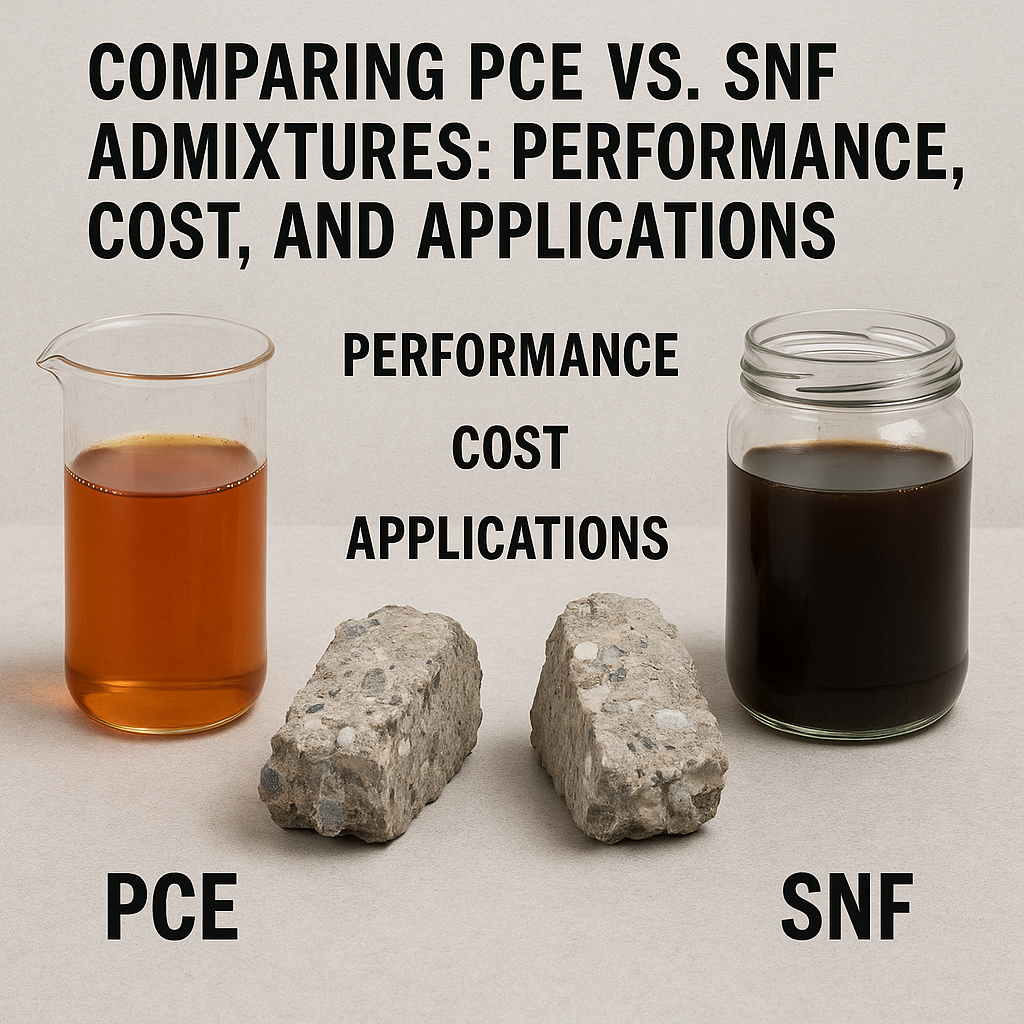
In the evolving world of concrete technology, choosing the right chemical admixture can significantly influence performance, cost, sustainability, and constructability. Two widely used classes of high-range water reducers are Polycarboxylate Ether (PCE) and Sulfonated Naphthalene Formaldehyde (SNF). While PCEs represent a more modern innovation, SNFs like the AltusFlow CL series carry a robust legacy of success. So, how do these two admixture types compare in terms of performance, cost, and applications? In this in-depth comparison, we break down the pros, cons, and real-world use cases of PCE vs. SNF admixtures to help you make informed decisions for your next concrete project.

Understanding the Chemistry
What is SNF?
SNF, or Sulfonated Naphthalene Formaldehyde, is a traditional high-range water reducer that has been in use since the 1970s. The AltusFlow CL series is a notable example within this category. These admixtures function by dispersing cement particles through electrostatic repulsion, improving workability and reducing water demand.
What is PCE?
PCE, or Polycarboxylate Ether, represents a newer generation of water reducers. Unlike SNFs, PCEs use a steric hindrance mechanism where long polymer chains surround cement particles, providing more controlled dispersion. This results in superior slump retention and mix customization capabilities.
Head-to-Head Comparison: Key Performance Metrics
1. Water Reduction Efficiency
- PCE: Offers up to 40% water reduction, allowing for ultra-high strength concrete and leaner mixes.
- SNF: Typically achieves 15–25% water reduction, adequate for conventional mixes.
Verdict: PCE leads in water-reduction performance thanks to its advanced molecular structure.
2. Slump Retention and Workability
- PCE: Provides excellent slump retention over long periods, reducing the need for re-dosing on-site.
- SNF: Has a shorter slump life, especially in warm climates or high-performance mixes.
Verdict: PCE excels, especially in remote or large-scale jobs where long workability windows are essential.
3. Set Time and Compatibility
- SNF: Can cause delayed setting times, particularly in cold conditions or high dosages.
- PCE: Offers better tunability with less sensitivity to dosage and temperature.
Verdict: PCE provides more predictable performance in varying conditions.
4. Compatibility with Supplementary Cementitious Materials (SCMs)
- PCE: Works well with fly ash, slag, metakaolin, and silica fume mixtures.
- SNF: Compatible but often less effective when working with ternary or quaternary mixes.
Verdict: PCE delivers greater versatility in mix design.
5. Strength Development
- PCE: Promotes higher early and ultimate strength due to improved hydration dynamics.
- SNF: Provides adequate strength improvement but does not match PCE’s potential.
Verdict: PCE is ideal for strength-critical applications like precast or high-performance concrete.
Cost Considerations
Initial Cost
- SNF: More affordable upfront, making it a good choice for budget-conscious public projects or low-spec mixes.
- PCE: Generally more expensive due to advanced manufacturing and customization capabilities.
Lifecycle Cost
- PCE: Enables reduced cement content for the same strength, lowering overall material costs.
- SNF: May require more cement and water to achieve the same performance, increasing the mix cost over time.
Verdict: While SNF has lower upfront costs, PCE often yields better cost-efficiency over the concrete’s lifecycle.
Application Guidelines
When to Use SNF (e.g., AltusFlow CL Series)
- Residential and municipal jobs where moderate performance is acceptable
- Projects with short haul times and no need for extended workability
- Ready-mix concrete plants with minimal use of SCMs
- Budget-sensitive public infrastructure initiatives
When to Use PCE
- High-performance concrete (HPC) and self-consolidating concrete (SCC)
- Precast and prestressed concrete applications requiring superior early strength
- Remote job sites or conditions requiring long slump retention
- Projects pursuing LEED or other sustainability certifications due to reduced cement content
Pros and Cons at a Glance
PCE Admixtures
- Pros: Superior water reduction, excellent slump retention, high strength gain, adaptable to SCMs, precise control
- Cons: Higher initial cost, sensitive to over-dosage if not properly managed
SNF Admixtures (e.g., AltusFlow CL series)
- Pros: Cost-effective, proven track record, easy to dose with standard equipment
- Cons: Limited slump life, less efficient with advanced mix designs, slower strength gain
Real-World Examples
Case Study: Urban Infrastructure Project
An urban paving project chose SNF-based AltusFlow CL due to the short haul distance, easy placement requirements, and budget limitations. Mix performance met basic requirements without the need for extended workability or high strength.
Case Study: Precast Manufacturing Facility
A precast manufacturer switched to a PCE admixture to improve turnaround time and achieve higher early strengths for faster demolding. The plant reported a 15% reduction in cement usage and 30% faster strength gain, improving productivity and cost-efficiency.
Conclusion: Choose Based on Your Goals
The choice between PCE and SNF admixtures ultimately comes down to the specific needs of your project. SNF-based options like AltusFlow CL series offer reliability and affordability for conventional applications. Meanwhile, PCEs shine in cutting-edge applications where performance, durability, and efficiency are priorities. Understanding the unique strengths of each admixture chemistry empowers engineers, contractors, and ready-mix producers to build better, smarter, and more cost-effective concrete structures.
Final Thought: Evaluate your project’s technical requirements, budget constraints, and environmental goals to match the right admixture to your application. When in doubt, consult your admixture supplier to tailor the perfect solution for your mix design.